A Blog To Comment On The Public Sphere

Friday, February 17, 2012

Popular Sovereignty

I find it very interesting that in today's day and age anyone's voice can be heard provided they have access to the Internet. Look at this blog for example. I'm not an acclaimed author nor am I a professional journalist, and yet I can type out my ideas for everyone to read. This can be very helpful and it can be very harmful when people are writing about politics. Either way, though, it is changing the way we conduct our policy making and adding another check and balance on the political system - the public opinion.

Internet politics are giving more power to the people by allowing their voices to be heard. When they like a law that has been passed, the lawmakers will know. When there is overwhelming opposition to a law that is going to be passed, the lawmakers will know. SOPA and PIPA are perfect examples of this. When the bills were being discussed, the public showed their discontent online. Reddit, Wikipedia, Google, and many more popular online destinations spread the word. Guess what? The people heard and took action. E-mails and letters were sent to congressmen, articles and blog posts were written in response, and even statuses were updated to attempt to stop the bill in it's tracks. And guess what? It worked.

Another great and current example is President Obama's newly proposed budget that has been "dissected" by blogs on both the conservative right and the liberal left. On Politico, Tim Mak writes:
"Conservatives in the blogosphere found much to pick at in the President Barack Obama’s proposed budget, objecting to specific items such as subsidies for the Chevy Volt, the lack of money for the D.C. education voucher program, funds for social security “program integrity” and special interest tax credits."

He later notes that the leftist blogs supported the budget:
"Meanwhile, liberal writers took to their blogs to praise the president’s initiatives on things like space exploration, the arts, LGBT rights, and cutting oil company tax breaks."


Not that the Internet is going to change everything about our political system, I mean the left and right wings are still going to bicker (see above), but I think we are in the middle of a new age of politics. When even the smallest of the "little guys" can voice his/her opinion, those in charge need to be aware that they are serving rather than ruling. After all, they are elected officials. It is like Benjamin Franklin said, "In free governments, the rulers are the servants and the people their superiors and sovereigns." I believe the Internet is pushing our nation closer to the initial idea of popular sovereignty on which it was founded. John Locke and Thomas Hobbes would be proud.

Saturday, February 11, 2012

The Beautiful "Truth"

Recently I watched a documentary called The Beautiful Truth, and I am quite sure that I'll doubt any documentary film with "truth" in the title from now on. A 15 year old Alaskan boy travels around the country with his father to uncover the conspiracies of the big pharmaceutical and food companies. He learns, through his first home-school assignment, of the Gerson method and searches for people who have been affected by processed foods and modern medicine and yet miraculously recover naturally. In the end, he has found a lot of "evidence" and wants to share the results with the world so the general public will be informed of the dangers they face in their everyday lives and how they can prevent/cure problems arising from modern food and medicine
.
The film is about something called "the Gerson method" which is a method of alternative medicine that supposedly cures all ailments by detoxifying and restoring the body to its healthy state so it is able to combat illnesses naturally. Here is what the Gerson Institute's website says about it:
The Gerson Therapy is a safe, natural treatment developed by Dr. Max Gerson in the 1920s. The Therapy activates the body's extraordinary ability to heal itself through an organic, vegetarian diet, raw juices, coffee enemas and natural supplements. The Gerson Therapy treats the underlying causes of disease: toxicity and nutritional deficiency. The Gerson Therapy is a non-specific treatment that effectively treats many different conditions by healing the body as a whole, rather than selectively targeting a specific condition or symptom. Over the past 60 years, thousands of people have used the Gerson Therapy to recover from so-called "incurable" diseases, including: Cancer (including melanoma, breast cancer, prostate cancer, colon cancer, lymphoma, pancreatic cancer and many others), Diabetes, Heart disease, Arthritis, Auto-immune disorders ....and many others

The film also explains what is wrong with our modern food and medicine industries. The food industry is slowly poisoning us throughout our lives according to this documentary. Processed foods are poisoning us and causing cancer, and pasteurized food is not giving us enough nutrition so we rely on the pharmaceutical industry and modern medicine. The pharmaceutical industry is supposedly manipulating other aspects of our lives so we become dependent on modern medicine so they stay wealthy. If any of this were substantially supported and at all true, I would be off in Alaska living off the land and distrusting big corporations and the government as well. However, I think there is just a little bias (sarcasm, just in case you couldn't catch it) in this documentary.

I find it hard to believe that modern medicine is failing us and hiding a cure for cancer from us all so we need their expensive drugs. Many people in medicine develop cancer or have a loved one who is afflicted or has been afflicted. They would not keep it hidden for the sake of the wallets of the people at the top of the pharmaceutical industry. Yes, eating healthy can help your body heal itself, but didn't we all learn that when we were 4 years old or so? And I believe modern medicine isn't failing as badly as the film portrays. Since modern developments like vaccinations, pharmaceuticals, and therapies like chemotherapy (all of which are condemned by the film), there have been eradication of diseases like smallpox and a dramatic increase in life expectancy in places where modern medicine is available. All around our quality of life has been increased and we no longer have to worry about our lives when we have an ailment like getting a fever, which was often fatal before modern medicine. I guess what I'm trying to say is the film exaggerates on many points and rarely makes sense as an argument.

I do think eating organic food and living a healthy lifestyle is good for you. Undoubtedly. I also, however, think someone who lives a lifestyle free from processed foods and modern medicine in Alaska is going to always be significantly healthier than someone who doesn't and lives in New York City. Although, just a hypothetical situation, it makes you wonder if following a strict diet and refraining from being treated with modern medicine when you're ill will actually be worse for you. It seems like a ridiculous paranoia of doctors and food companies to me. Everyone is entitled to their own beliefs, but there is more than one side to every story and I think we should be skeptical of one side being the "truth" before we blindly accept claims made by those like the people who made this documentary.

Saturday, February 4, 2012

What's Your Niche?


I was discussing in one of my classes about the demographics of an audience and how a speaker needs to adjust his message to suit the audience best. Some of these groups were separated by age, gender, ethnicity, and even by education level. It is human nature to categorize things, and people for that matter, so this is understandable. People who fit into these different groups do often have similar tastes to others in their group and differing tastes from others outside of their group. Advertisers use the labels placed upon people in the groups to more effectively sell their products, well at least in theory. The Internet has made it even easier to categorize people into these groups, but the problem is many people would surely be dissatisfied with the categories they have been placed into.

Anouseh Ansari, CNN contributor, had this to say about the labels that are placed upon us (and that we place upon others as well):

"Who am I? I'm a daughter; I'm a sister; I'm a wife; I'm a friend; I'm an entrepreneur; I'm a space traveler; I'm an Iranian; I'm an American; I'm a woman; I'm a CEO; I'm a Muslim; I'm an engineer; I'm an author. I am all that and yet I am none of it. These are the different ways people define me. They would relate to me in their own way -- see me in their own light -- and label me and box me as they see fit...Who am I? I am a human -- plain and simple -- no labels attached. I would be honored if everyone would think of me and preferably others as such."


As noble as it is to see everyone for themselves before categorizing them into groups, it is part of our daily life. At a basic level, we do this to better understand our reality, and at a business level we do this to better serve our customers' needs. With the prevalence of the Internet in our daily lives, however, these labels define us more than ever. Especially because of companies like Google and Facebook that gather information about us, we are falling more and more into the molds that are created to define us. A problem with this, though it's convenient, is that there are stigma attached to the groups. A person whose search history is composed of PETA's site or similar websites and vegetarian chat rooms will not likely be shown advertisements for Omaha steaks and Hickory Farm sausages. In this case, the stereotypes attached are useful, but they are not always so useful. I saw a story on the news of a woman in her fifties who loved baseball, and yet, because of Google's new privacy policy, was categorized as a 18-25 year old male. I'm not saying this is a huge problem, but it is possibly the first sign of a failed system of labeling.

Where this road leads, I'm not sure, but here is an alarming example of what could happen when labels are placed on all sorts of groups without remembering that each person is still an individual:

"Canadian singles who use Android phones are more likely to have sex on a first date and partake in one-night stands, in comparison to those with other types of smartphones, according to a results of a survey."


Enough said.

My purpose in writing about this isn't to undermine the effectiveness of the marketing strategy or urge people to guard their information from sites that gather it. I am simply encouraging a debate in order to get people thinking about how they are labeled and whether or not they approve of the groups they would be placed in. It might help you learn more about how others see you or it might persuade you from blindly listening to ridiculous claims like the one mentioned above. I'll leave you with this question to ponder - what's your niche?

Thursday, January 26, 2012

Jeremy Rifkin & The Future of Public Intellectuals


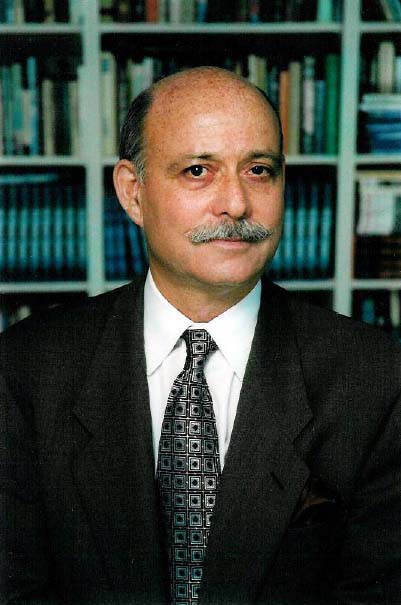
Jeremy Rifkin is an economist, a political advisor, a bestselling author, and a lecturer at the world’s number one business school, just to name a few. His ideas in his book
The Third Industrial Revolution: How Lateral Power is Transforming Energy, the Economy, and the World are actually being implemented as a long-term economic sustainability plan in many European countries. He is also applying these ideas in his Third Industrial Revolution Global CEO Business Roundtable to help cities, regions, and even national governments transition to post-carbon Third Industrial Revolution infrastructures. There is no question Jeremy Rifkin is an intellectual and he has spread his ideas in ways that could not only be easily accessed by the public but also in ways that will likely directly affect it. Yet the question remains - is he a public intellectual?

First, it must decided what a public intellectual actually is. The obvious comes to mind quickly, he or she must be an intellectual. Is this an intellectual outside of the academic setting? Within it? Can a religious intellectual be a public intellectual regardless of the certainty that many in the “intellectual community” would not accept the ideas behind religion? It is because of all of these questions and many, many more that it is hard to define what a public intellectual is.

I agree most with a description by Christopher Hitchens in his article entitled, How to Be a Public Intellectual:

“One might do worse than to say that an intellectual is someone who does not attempt to soar on the thermals of public opinion. There ought to be a word for those men and women who do their own thinking; who are willing to stand the accusation of “elitism” (or at least to prefer it to the idea of populism); who care for language above all and guess its subtle relationship to truth; and who are willing and able to nail a lie. If such a person should also have a sense of irony and a feeling for history, then, as the French say, tant mieux. An intellectual need not be one who, in a well-known but essentially meaningless phrase, “speaks truth to power.” (Chomsky has dryly reminded us that power often knows the truth well enough.) However, the attitude towards authority should probably be sceptical, as should the attitude towards utopia, let alone to heaven or hell. Other aims should include the ability to survey the present through the optic of a historian, the past with the perspective of the living, and the culture and language of others with the equipment of an internationalist. In other words, the higher one comes in any “approval” rating of this calling, the more uneasily one must doubt one’s claim to the title in the first place.”


Christopher Hitchens also says that the title public intellectual is a “title that has to be earned by the opinion of others.” I completely agree. I think a huge part of being a public intellectual is being able to relate your ideas to the public. With as many pundits out there with the ability to relate their ideas to the public, though, what sets apart the public intellectual? I believe that not only is a public intellectual an intellectual that is able to relate his or her ideas to the public, but is someone who also relates ideas that are useful to the public or have the public in mind. A public intellectual, I think, should be altruistic in a way and have a bigger picture in mind. I can’t say it any better than as Hitchens puts it, “to be a public intellectual is in some sense something that you are, and not so much something that you do.”


Under these parameters, I would say Jeremy Rifkin is a public intellectual. He is certainly an intellectual. He graduated from Wharton School of Business at the University of Pennsylvania with an economics degree and from the Fletcher School of Law and Diplomacy at Tufts University with a degree in international affairs. He certainly is available to the public through his numerous books and appearances on television, but he also has adapted with new technologies to make his ideas available all over YouTube. He is certainly thinking with the public in mind as seen in his many contributions to struggling European governments by helping to shape more modern public policy, his book The Empathic Civilization (in which he urges for a global compassion and an ability to empathize in order to change the way we live on this planet before our own demise), his “Roundtable” to help the world transition into the future, and even in his eagerness to share his ideas with young intellectuals at several universities including his old “alma mater.”


Hooray! Jeremy Rifkin is a public intellectual! But how many are left? As John Donatich said:


“The very words "future of the public intellectual" seem to have a kind of nostalgia built into them, in that we only worry over the future of something that seems endangered, something we have been privileged to live with and are terrified to bury."


Richard Posner compiled a list of “public intellectuals” based on a system of citations in scholarly articles, media attention, and website hits. For the very reason some of these people were assessed as being public intellectuals, I would disagree that they should be classified as such. With the Internet acting as a barrier between the user and what he produces, the person behind the computer could be anyone and moreover could be pretending to be anyone else. That’s the whole power of the anonymous; it can make anyone’s opinion appear on the same level as anyone else’s. The Internet has created a level battleground for ideas and opinions. Though this can be a great thing for democracy in that now more than ever people can voice what they believe and what they think is best, it can also be a horribly detrimental thing for the exact same reasons; and detrimental to public intellectuals as well. It makes it harder for the public, if the public is even interested in doing so, to sift through the uneducated rants and raves to find material that should be considered intellectual. On the flip side, however, it has also made it easier for public intellectuals and rising intellectuals to share their ideas and scope out new ones.


Now, as scary as it is, this may be true, the public intellectual may be dying out as it has been defined in the past (and I blame the ease of saying whatever you like on the Internet). However, this may just be another shift in the planes of existence of the public intellectual. In fact, with more knowledgeable people and a faster way to communicate, the public intellectual may be thriving more than ever. The problem is now it will be more difficult to find them, like finding a needle in a haystack (if the needle were actually someone sharp [pun intended] and the hay were all of the dull, impulsive people who voice their opinions on the Internet). That leaves the choice up to us, the public (not Richard Posner), in deciding who the world’s next public intellectuals will be. Choose well.